Breakfast with || Lora Avedian
The textile artist on her work and the layers of possibility within it.

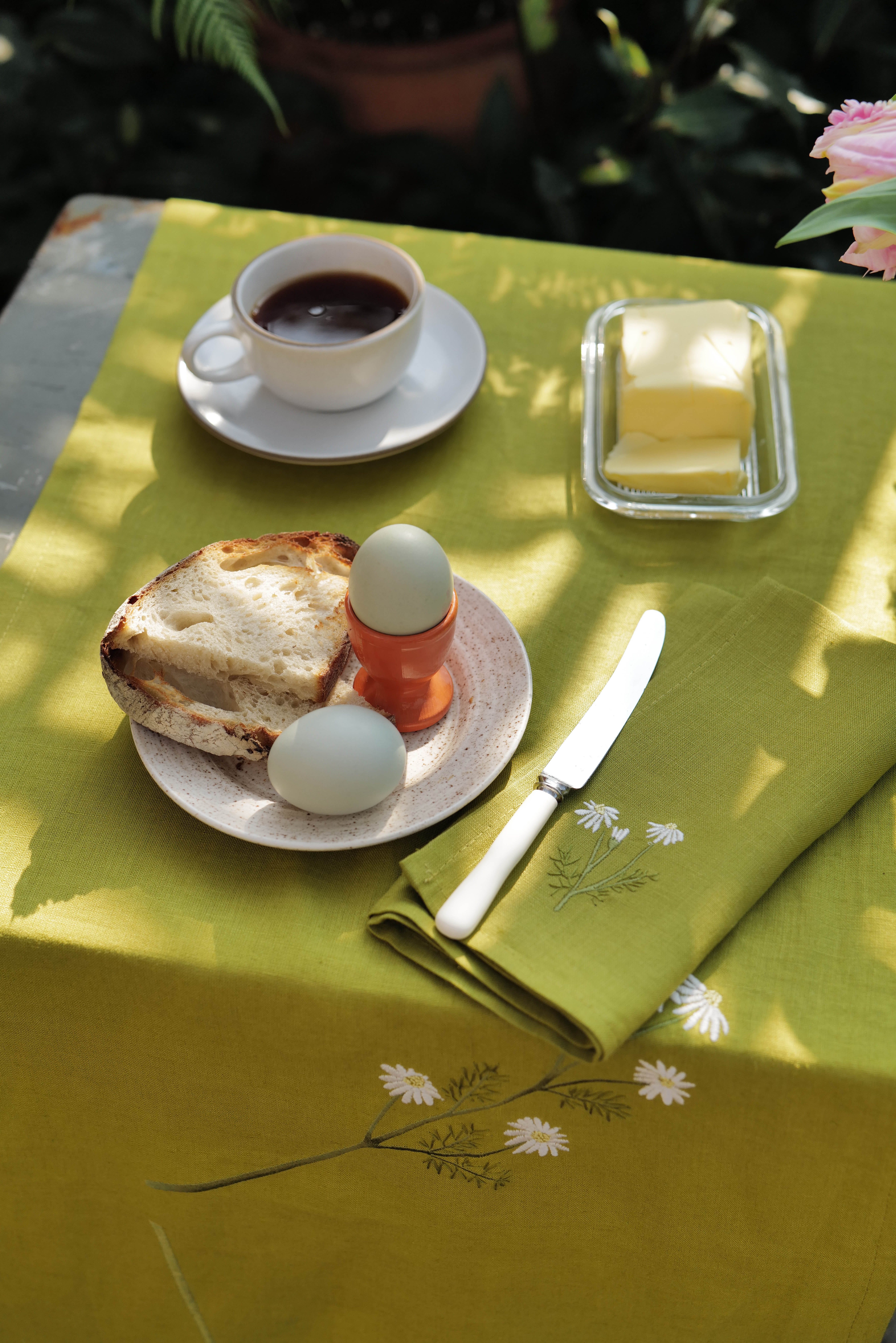
We sit down for breakfast with textile artist, Lora Avedian.
Lora Avedian was a child and a teenager who knew exactly where she was headed. At age 12, sitting on a London bus with her father, the pair passed Central Saint Martins: “You’ll go there one day,” her father said, matter-of-factly. This story is one of belief. If yours is ever uncertain, this is the story to read.
Raised by creators and makers, Lora grew up with the value of creativity proclaimed from the beginning. Her parents met at Chelsea College of Art, and whilst the realities of life meant that paying the bills trumped creative pursuits, the hope and belief in artistic life were planted early.
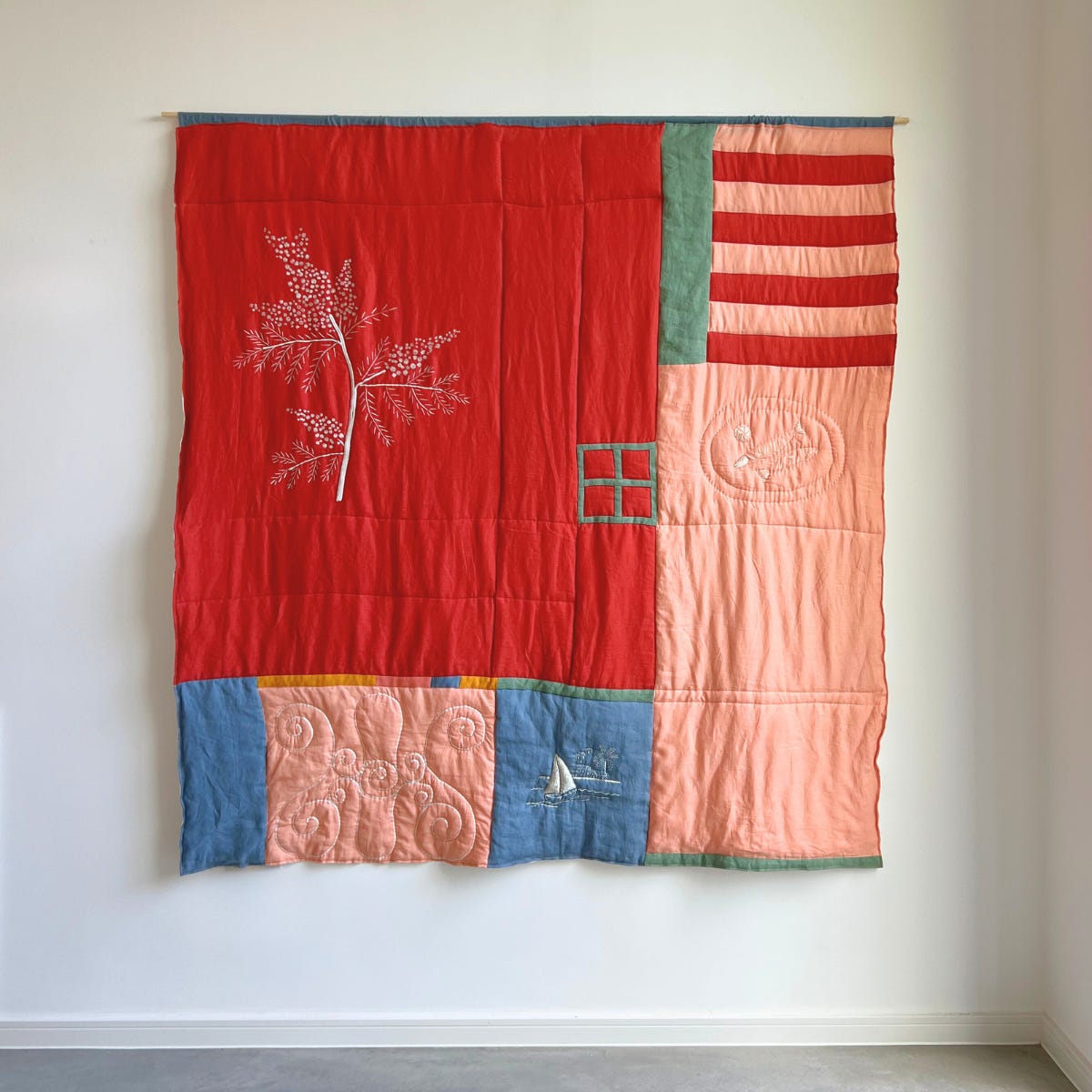
Her work today heralds the sun; embroidered blooms look to the light. Lora, though, is not a morning person. Instead she works late into the night. It feels like every great art school imagining: the sewing machine working away while the moon hangs overhead, observing. Rather than breakfast, a morning Yorkshire tea, strong and milky, offers the start she needs.
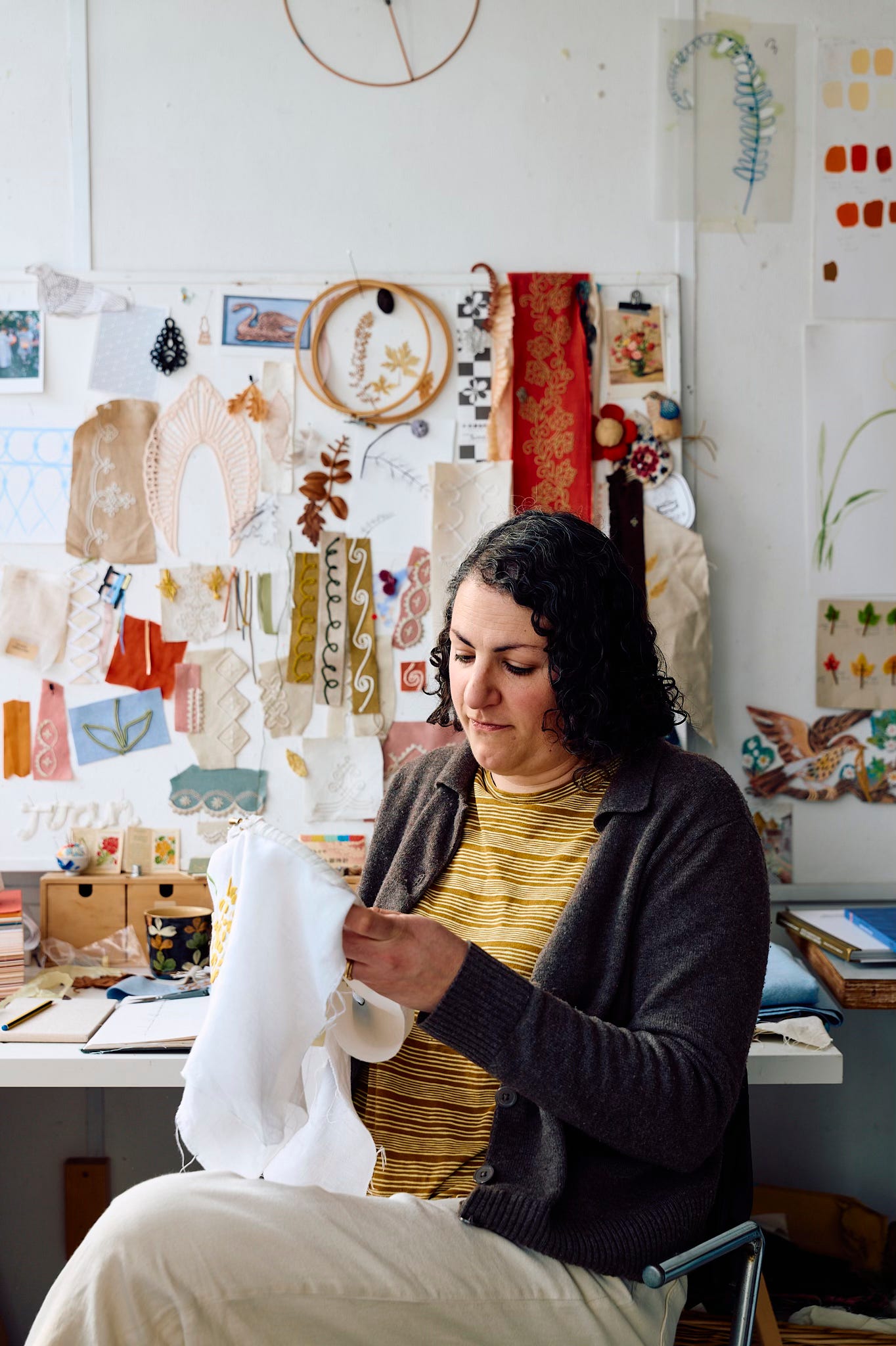
When it comes to people of influence, Lora’s stories are broad-ranging but always come back to textiles, to fabric and thread, and their potential to tell stories.
A vivacious art teacher at school shared Talking Heads music videos (with those excellent suits) alongside equal regard for Picasso, still lifes, and the classics. A family friend who worked at The Polka Theatre introduced her to the world of costume making.
Time spent with the textile artist Karen Nicol and her husband, the artist Peter Clark, showed what was possible in mixed-media textiles, in collage and layers.
Working at Aquascutum creating Christmas window displays offered yet another chance to see the potential in fabric.
This is an onion-layer story: layer after layer opened to reveal possibility in material, thread, machines, technique, fashion, theatre, home. Possibility and application carry equal weight here. Making matters as much as use.
“It enabled me to believe that it was possible to build a life on making, on making art and on creating. You have to find people in your life, and in the lives of your children, who show that it is possible,” says Lora.
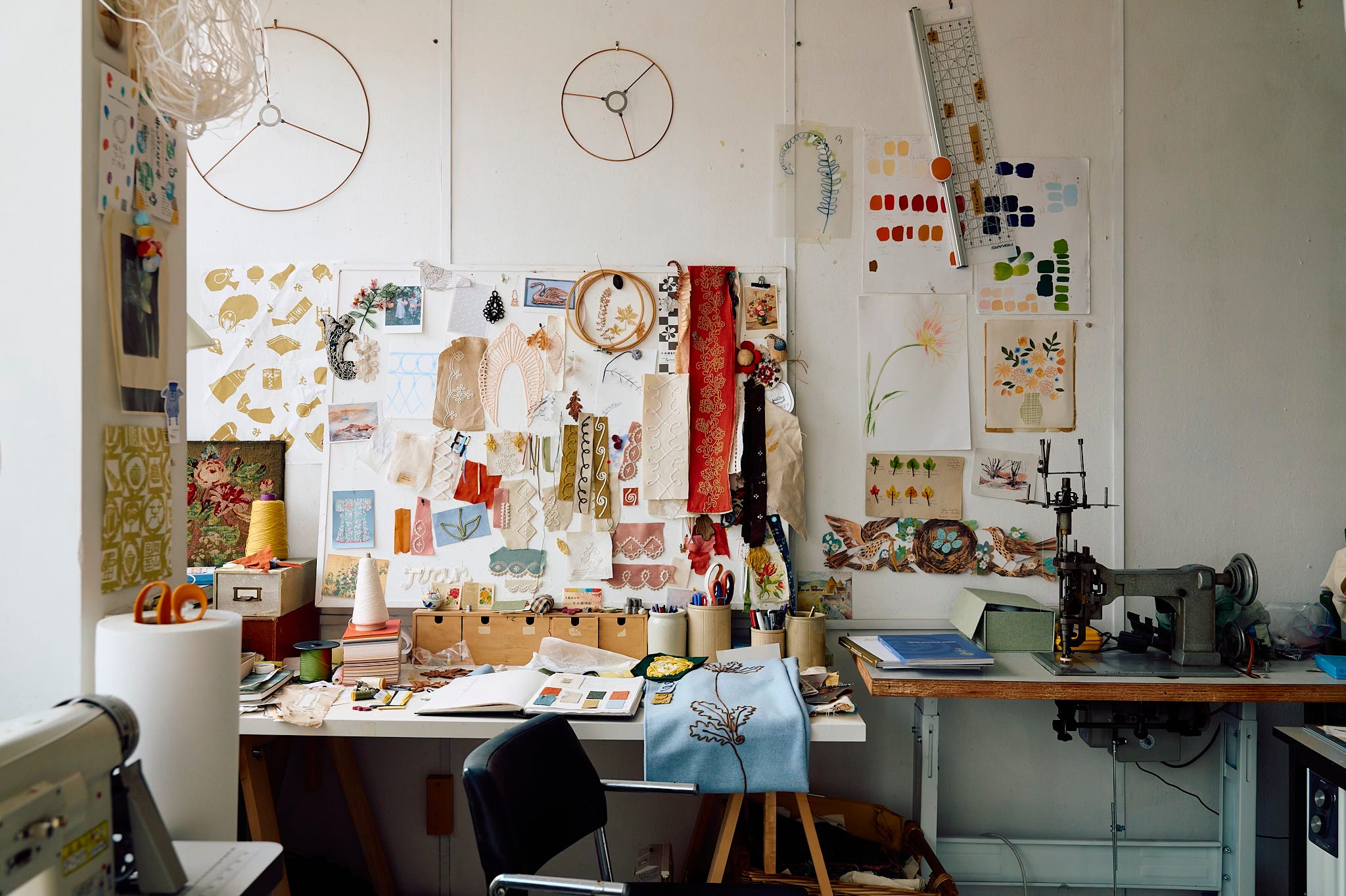
When it comes to important places, Lora expresses a need that I think many creatives share. She needs a variety of inputs into her work. It is that variety of visual references that allows her to keep developing her work. Pouring in plenty of references enables better work.
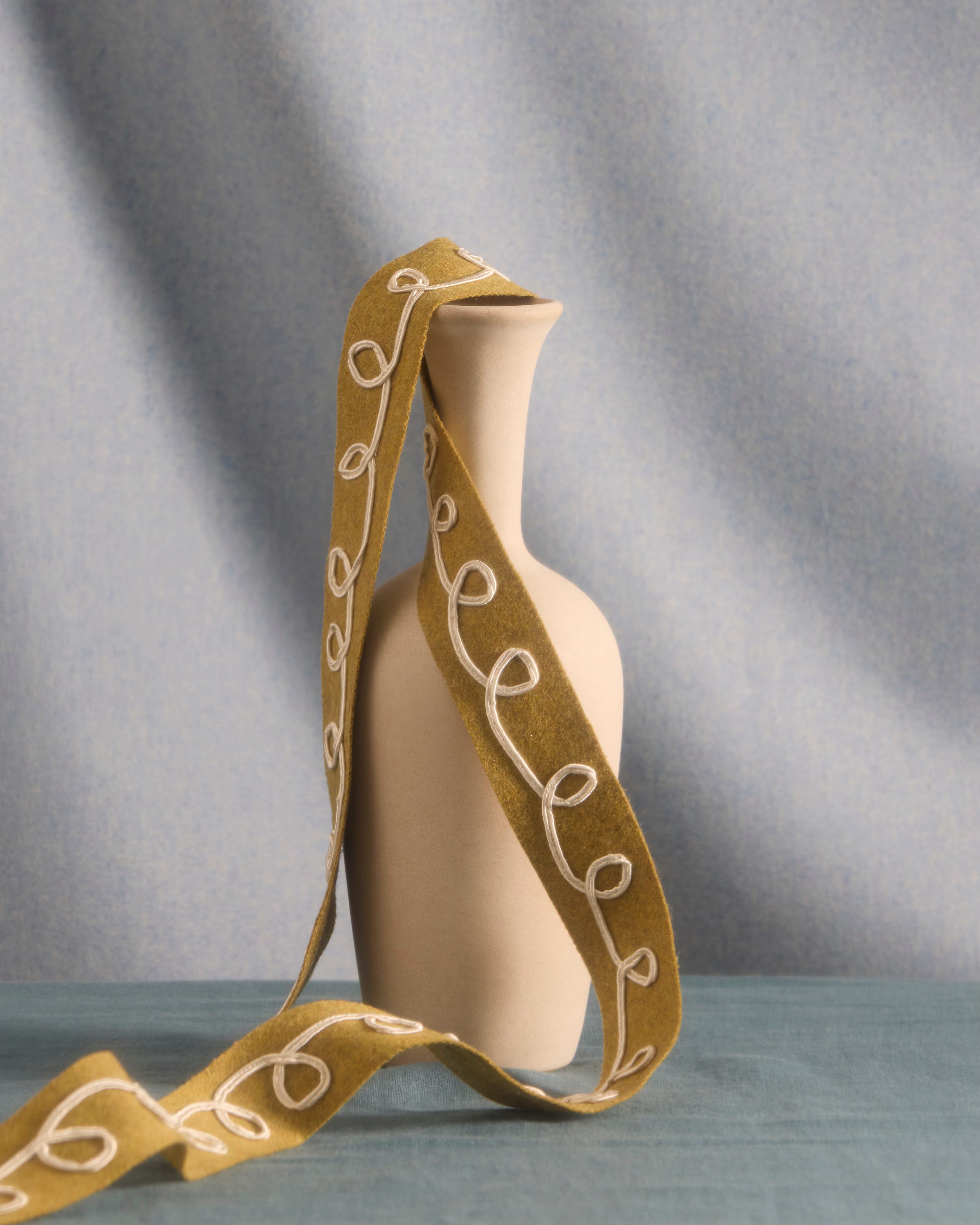
The themes of nature, of fabric and patterns plait together in the references that Lora shares. It will be no surprise that nature and wildflower meadows are critical. Metalwork is an important reference, offering pattern and repeats that we can see in Lora’s work, particularly the Looping Forms collection. Lora’s Armenian heritage is significant too. A recent trip to a museum in Yerevan involved many hours looking at pots and ceramics.
Lora prefers podcasts and audiobooks to reading and cites Why Women Grow, hosted by the talent that is Alice Vincent, as something that moved her and influenced her thinking. “I really enjoyed the exploring of understanding yourself through growing things and making things,” she says. “Learning by doing.” I think many will concur.
When I ask Lora about what she thinks about luck. Her answer is characteristically honest. “I feel lucky to have Instagram. It has been a big part of being able to share my work. It has helped me to build my network.”
We delve into the notion of the maker’s life without Instagram as a tool. It takes Lora back to her BA days, when putting on exhibitions was key, as was getting work into magazines, and networking in person with real intent. Whilst it is easy to worry or complain about social media, and not without reason, it is good also to consider the truth of its value.
Another stroke of luck came when Lora was asked to do a residency at Howe on Pimlico Road for London Craft Week.
“Emily from Howe had seen my work and gave me that great opportunity. It showed me a whole new world, interior design,” explains Lora.
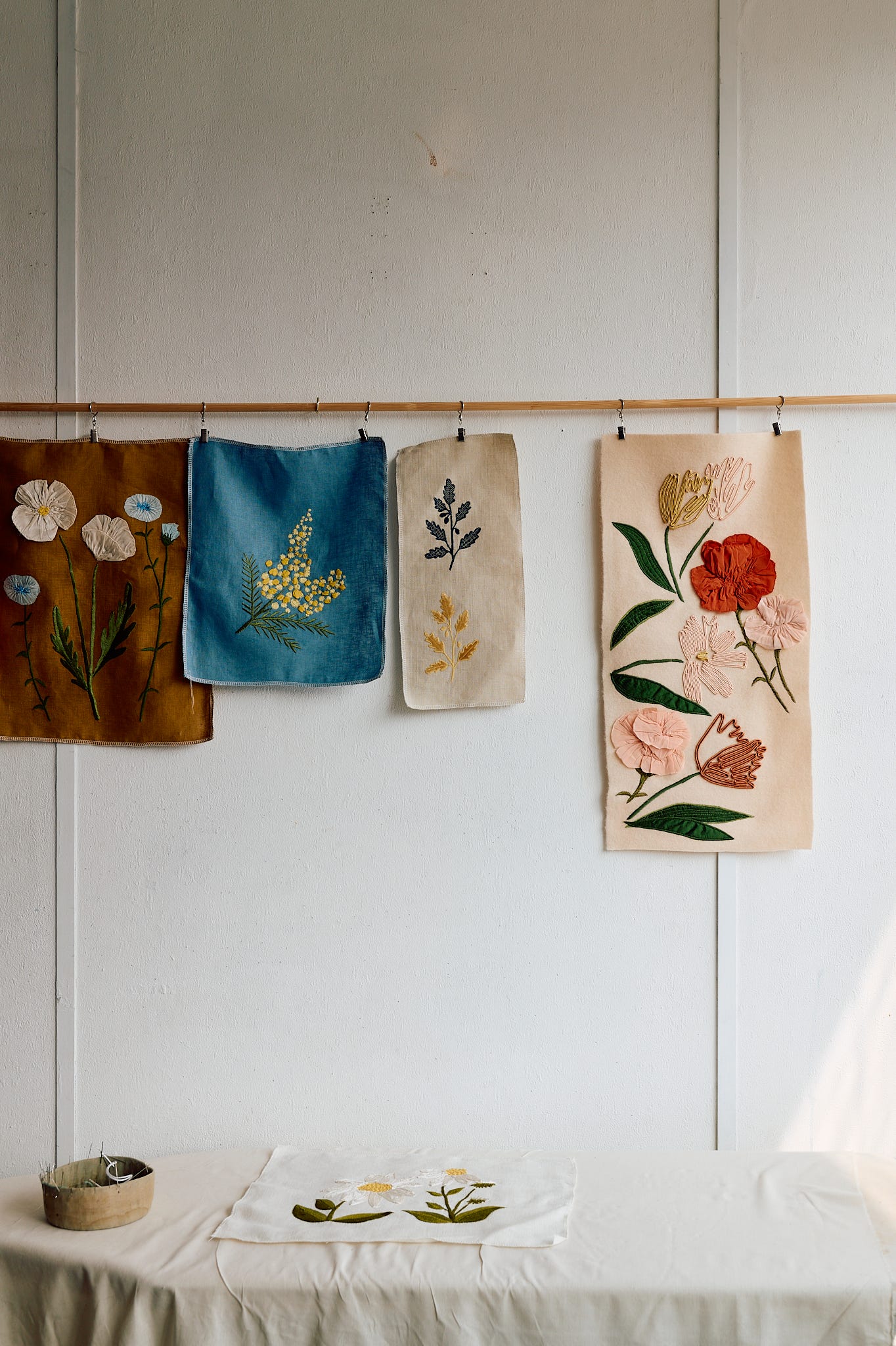
Lora’s honesty extends to the commercial side of things too. It was only later in her career that the commercial side of things opened up to her. “It was a real switch to thinking about how I was going to feed myself”. More recently, she has learnt a “lot about confidence and standing by the value of my work.”
“My greatest commerical lesson has been not to try to compete with the big companies. You have to offer something different. I am not producing things in a factory. I do not want to mass produce things. I am not buying thousands of metres of fabric and making it cheaper. It’s taken time to learn that but it’s very important. I am making something beautiful, beautifully.”
You won’t be surprised to hear that Lora is someone who has not stopped playing. Habits from her art school days have remained. Even the pressure of running a business and motherhood has not dulled the flame.
I was struck by her idea that “When you are a creator, nothing can stop you in the end, you just have to make in some way. There is a yearning to make inside you. It is not really optional. Sometimes you might be only just holding on but you find a way.”
It is clear that materials are vital for Lora to play, and I imagine stacks and piles around her studio. Any dip in work or any quiet week becomes the chance to play. It seems that ideas are always brewing, and Lora takes any chance she can to act on them.
“Rather than collapsing into quieter times, I just spend as much time as I can making and experimenting. I grasp it and get going on my ideas. Doing things in practice is more effective for me than thinking in theory. Does the clay bend? Does the fabric work in this way? I’m not a thinker as much as I am an instinctive maker.”
When it comes to the future, Lora is hopeful.
“I hope that handmade things are going to be increasingly valued. It seems to me that more and more craftspeople are being put in the spotlight. Craft is being celebrated in exhibitions and fashion houses. I used to work for JW Anderson. It was a bonkers time but his collections are craft related. He has real integrity about celebrating British craft. It’s why I wanted to work for him. It doesn’t mean that he doesn’t also have to do the ‘commercial’ thing as well! But people like him make me feel hopeful.” I agree.
I hope that we will find ourselves knowing the person who made our plates and jumpers. Perhaps we will have shaken the hands that made them.
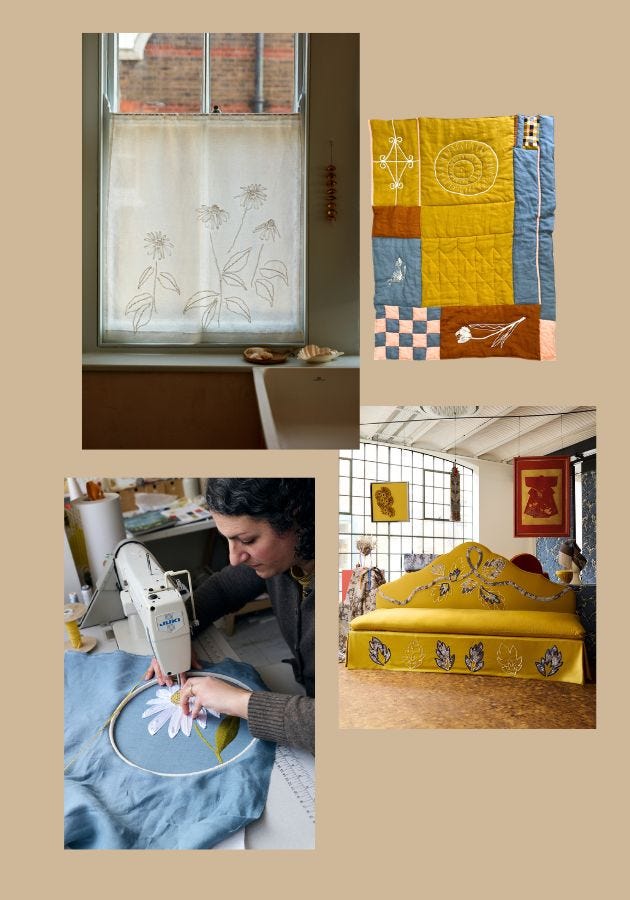
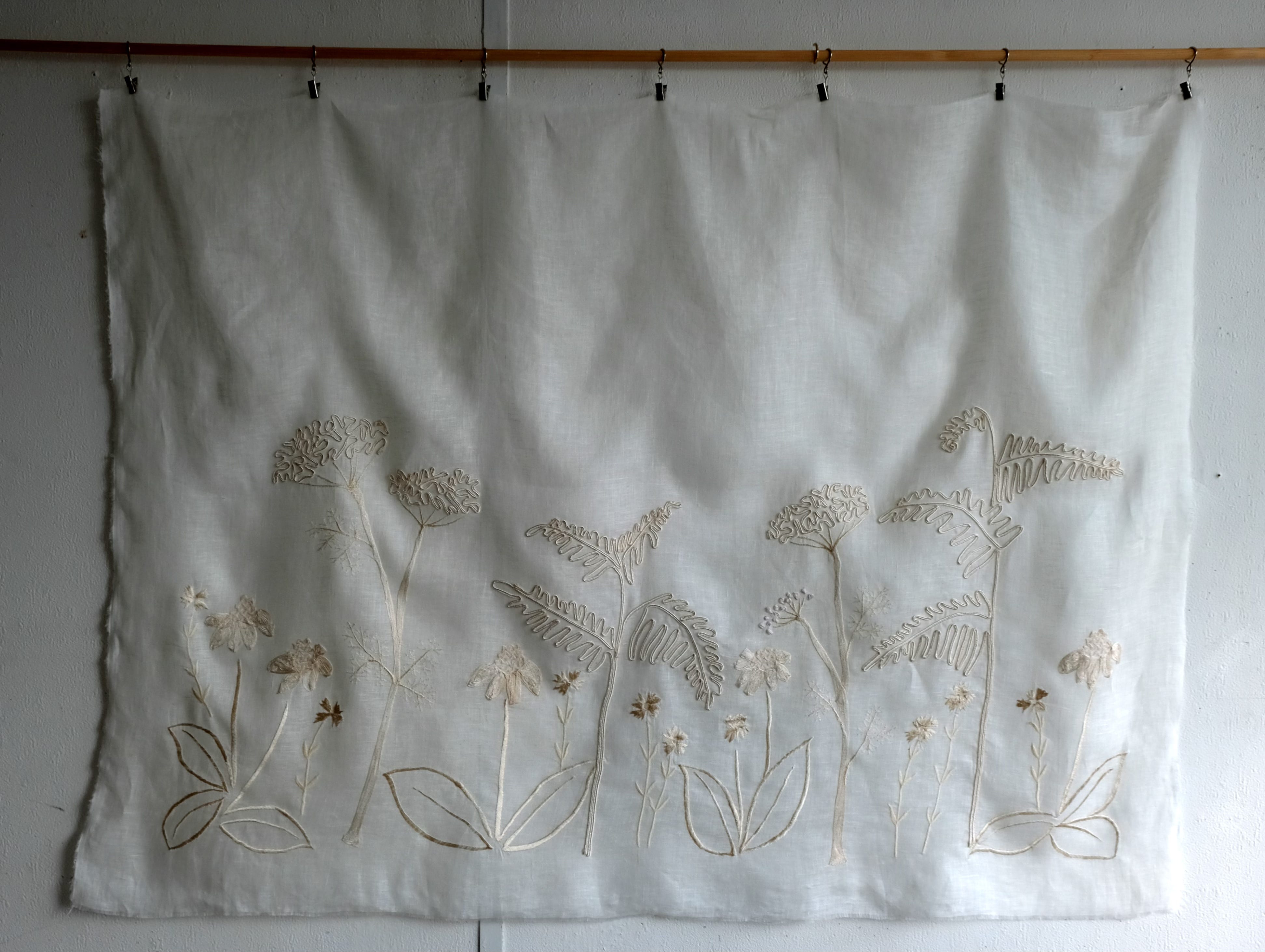
More personally, Lora is working on a new curtain collection and will be exhibiting her work very soon.
What is interesting to me is that, in amongst all of this, it is Lora’s deep foundational belief that sits with me, stays with me, lights the way. What a gift to be given and to share. Belief and hope are diamonds. That belief is precious.